

Do you know where the glycerin in your face cream comes from? Or how the hyaluronic acid in your morning serum is processed?
Halal certification in cosmetics is one of the most rigorous standards for ingredient safety, manufacturing purity, and supply chain control.
This certification works like a GPS for every ingredient in a product. While an organic standard guarantees that an apple hasn't been treated with pesticides, the halal standard ensures that every ingredient is traceable to its source — from the farm to your bathroom shelf. For consumers seeking true transparency in clean cosmetics, this traceability is increasingly a crucial factor in their choices.
Halal Certification — A Standard for Quality and Purity
Imagine a system that tracks every ingredient in your product like a detective. Halal certification in the cosmetics industry is exactly that — a quality control system similar to ISO standards, with a focus on origin and purity.
Unlike most other standards, halal certification isn't satisfied with just one step back in the supply chain. It requires complete documentation for every ingredient — from the farm where the aloe vera was grown to the factory where the final product is packaged.
Certification bodies like AFIC conduct detailed audits of the entire chain. Every ingredient must have its own "passport" — a document showing its history, from agricultural records to production processes and transport conditions.
What does this mean in practice? Separation of production lines. Documented cleaning procedures. Regular inspections. These measures reduce the likelihood of cross-contamination to a minimum — which is precisely why companies with multiple certifications are considered an industry benchmark for purity.
What Exactly Does Halal Certification Check?

When an auditor enters a factory, the inspection doesn't end with the final product. Every step of the process — from how argan oil is stored to how it's blended with other ingredients — is subject to control.
The audit covers suppliers, production, and packaging — but it's not a superficial check. Certification bodies conduct thorough reviews of documentation, facilities, and processes that last for days.
The methodology has several phases: documentary review, facility inspection, production process analysis, and verification. Each phase has strict criteria.
The list of required documents is impressive — certificates for each raw material, analytical reports, production records, transport documents. Companies must maintain detailed records that allow every ingredient to be traced to a specific batch.
It is precisely this depth of documentation that makes halal certification one of the most sought-after standards for purity in the cosmetics industry.
Ingredient Control
Every ingredient has its own "identity" — documented to its source, whether it's a farm or a mine. But the standard doesn't accept all ingredients. Some are excluded based on strict purity criteria.
Ethanol and certain alcoholic derivatives do not pass the check. The reason? Potential contamination and insufficient traceability in the production process. When you cannot guarantee complete purity, the standard says "no".
Animal derivatives like porcine collagen are also excluded. The problem isn't the ingredient itself, but the impossibility of fully tracing its source and processing method — too many unknowns in the chain.
Genetically modified organisms (GMOs) are treated with particular caution and are only permitted if fully documented.
Therefore, synthetic alternatives are often preferred — they provide better quality control. Synthetic hyaluronic acid instead of animal-derived, plant-based glycerin instead of animal-derived.
Production Process
Imagine two kitchens — one for vegan dishes, the other for meat specialties. This is how halal-certified production works. Production lines must be physically separated from those that do not meet the standard.
This separation is not symbolic — it implies separate ventilation systems, dedicated tools, and different production schedules.
Cleaning is performed with specialized procedures and approved detergents. Temperature, humidity, and duration are monitored with scientific precision.
Each batch receives a unique number that allows complete traceability to the end consumer. If a problem arises, the source can be identified within hours.
Storage and transport are subject to the same strict standards for temperature, humidity, and protection against contamination.
AFIC and Other Certification Bodies
Who actually stands behind these certifications? AFIC is a long-standing Australian certification body with broad international recognition. It has been working in the cosmetics and food industries for decades, with rich experience in complex supply chains.
Because AFIC audits both food and cosmetic production lines, the purity standards are complementary.
Other recognized certification bodies include HMA and JAKIM, which differ in audit scope, inspection frequency, and transparency.
It's important that the validity of the certificate can be checked in real-time. AFIC maintains a public database available at afic.com.au, JAKIM at myehalal.halal.gov.my, and HMA at hmacanada.org. Every legitimate certificate contains a unique number (e.g., AFIC-COS-2024-1257) for verification through these platforms. In seconds, you can confirm whether the certificate on the label is authentic.
Comparison: Halal vs. Organic vs. Vegan vs. Cruelty-Free

Why do some products have four different certifications on their labels? Because these standards aren't competitive — they're complementary. Each looks at a different part of the story.
The Halal standard focuses on traceability — where each ingredient comes from. The Organic standard cares about cultivation methods — no pesticides or synthetic fertilizers. The Vegan standard checks for the absence of animal ingredients. Cruelty-free confirms an ethical approach — whether the product has been tested on animals.
Products with multiple certifications provide multi-layered quality verification. Each standard controls a different part of the chain, which means greater assurance for the consumer.
INIKA Organic — An Example of Combined Certifications

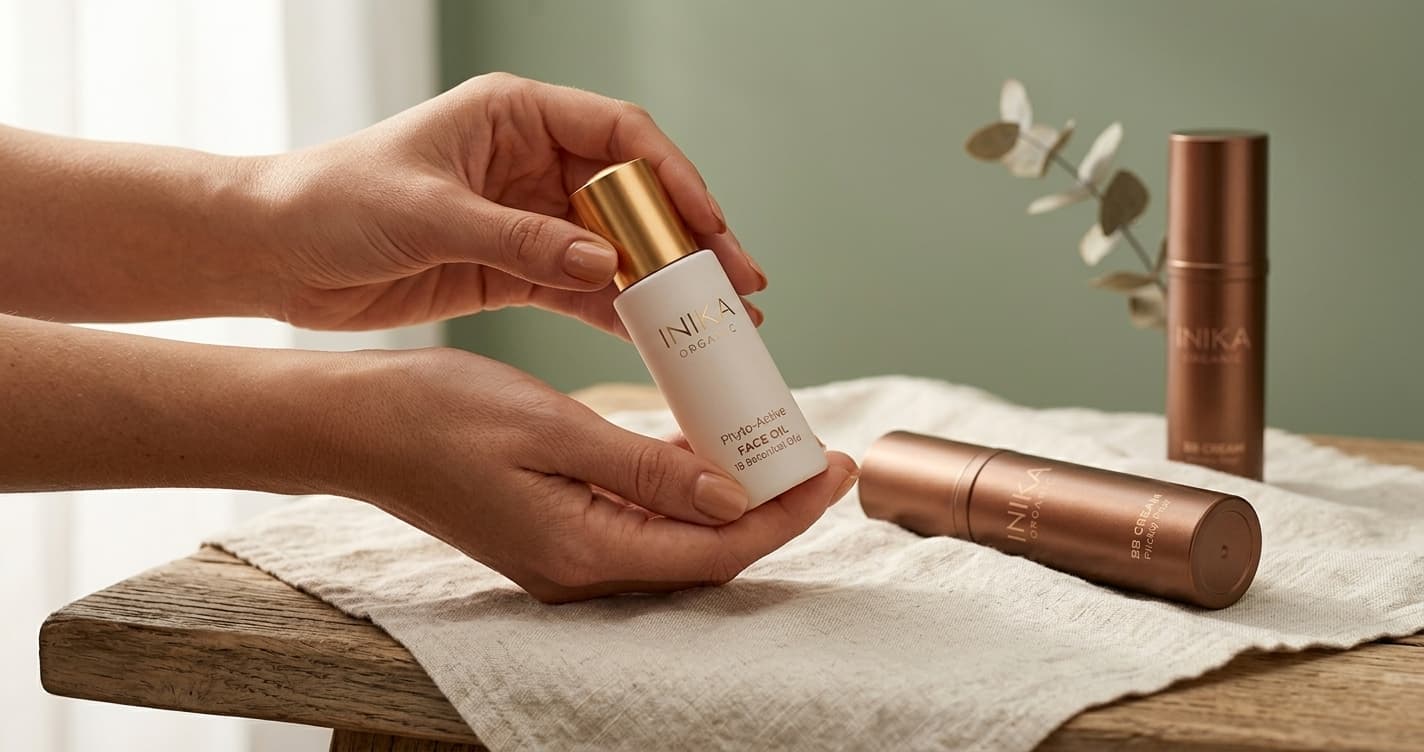
INIKA ORGANICPhyto-Active Face Oil4.460 MKDView
What happens when a brand decides to conquer all possible certifications? You get INIKA Organic — an example of what it looks like when a company truly commits to quality.
The INIKA Organic collection simultaneously carries organic (ACO), halal (AFIC), vegan, and cruelty-free certifications. These aren't just stickers on boxes — each certificate is the result of an independent audit.
Here's what that means in practice. The ACO (Australian Certified Organic) standard ensures that plant-based ingredients are grown without synthetic pesticides and chemicals. The AFIC Halal certificate adds an additional layer of traceability — every ingredient must be traced to its source. The Vegan certificate confirms the absence of animal ingredients. Cruelty-free guarantees that no product has been tested on animals.
INIKA exclusively uses mineral and plant-based raw materials, with a special focus on ethical sourcing. The brand boasts that it holds more natural and organic certifications than any other beauty brand — a strong statement backed by concrete certifications.
The combination of four certifications means that the same product has passed four independent verification systems — each with a different focus and its own criteria. Mineral pigments (titanium dioxide, iron oxides) are documented from mine to final product. Plant oils and extracts have organic cultivation certificates.
The result is multi-layered verification that ensures every product meets all criteria simultaneously — a rare combination even in the premium segment of clean cosmetics.
How to Recognize a Legitimate Halal Certificate

Have you ever wondered if that certificate on the label is real? In an era of counterfeit documents, this verification is crucial.
Firstly, look at the logo. It must be clear, legible, and match the official logo of the certification body. Blurry, unclear, or slightly altered logos are a red flag.
Every legitimate certificate contains a unique number — a combination of letters and numbers, for example, AFIC-COS-2024-1257. This number is like a fingerprint — unique to each certificate. The expiration date must be clearly stated, as certificates have a limited validity period.
Beware of fakes. A popular tactic is using names like "International Halal Authority" or "Global Halal Certification". They sound impressive, but they are not recognized institutions. If you don't know them — check.
Enter the certificate number on the appropriate platform, and in seconds you'll know if it's authentic. If the certificate cannot be found, or if the company refuses to provide the number, it's a clear sign that something is amiss.
Conclusion: Halal cosmetics are not just a matter of choice, but of the highest standard for transparency. With this certificate, you know exactly what you're applying to your skin — no hidden ingredients and no compromises.
Explore the INIKA Organic collection with AFIC Halal certification at nomiandyou.com