
Every summer, it's the same story. You apply sunscreen. Half an hour later, your skin is sticky, and by noon, your face is already whitened. By evening, you've made up your mind — no sunscreen tomorrow.
Zinc oxide is the ingredient behind mineral SPF. This isn't a new discovery — but new formulas in recent years have changed the structure: a light texture, no white cast, and zinc oxide creams gentle enough to be used under makeup.
That's why good mineral sunscreen is no longer just for the beach. It's becoming everyday natural sun protection — for around town, for work, for driving.
Zinc Oxide Isn't a Mirror — And That's Good News
For years, it was repeated that mineral filters "repel" rays, and chemical ones "absorb" them. A vast oversimplification. Zinc oxide actually absorbs, scatters, and partially reflects UV rays. All at once.
What truly makes it different from chemical filters?
Zinc oxide stays on the skin's surface; it doesn't penetrate it. Chemical filters must penetrate to work — it works from the outside. It's active immediately, without waiting. And it's photostable: some chemical filters degrade in the sun and require additional stabilizers, while zinc oxide remains unchanged. Plus, it covers both UVA and UVB rays — full-spectrum protection.
The Myth of the White Cast
The white cast isn't zinc oxide's fault. It's the fault of particle size. Larger particles mean a thicker, whiter texture. The smaller they are, the less white remains on the face.
"Non-nano" means particles of 100 nanometers or larger. Small enough for a smooth texture, but not so tiny as to be concerning. And one important nuance: even nano-particle zinc oxide remains on the outer layer of the skin and does not penetrate deeper. In a cream or lotion, the ingredient does not enter the tissue.
In short — modern non-nano formulas don't leave a white film and don't make you look powdered.
Summer Rules: How Much, When, How Often

This is where most of us make mistakes. Not in choosing the cream — but in the quantity and timing.
How much. For the face — two lines the length of your finger, about one teaspoon. For the body — a full shot glass. Half the dose is half the protection, literally.
When. Apply 15–20 minutes before going out in the sun. Mineral SPF is active immediately, but it needs a little time to settle evenly on the skin.
How often. Every two hours. And immediately after swimming or sweating, without exception. SPF50 stops about 98% of UVB rays, SPF30 — 97%. The difference sounds small, but over a whole day in the sun, it adds up. And one more thing — no SPF stops 100%. That's why shade, a hat, and sunglasses remain part of the story, not a replacement for cream.
SPF Under Makeup — The Ideal Base
If you wear makeup every day, mineral SPF is your new primer. The texture is smoother and more matte than chemical ones, settling on the skin without disappearing and creating an even base on which foundation and eyeshadow sit better.
The order is simple: moisturizer → SPF → makeup. Nothing between the SPF and the skin — every layer in between reduces protection. And if you want to refresh your SPF during the day without ruining your makeup, there are mineral powders and sprays specifically for that.
This is also where the summer routine differs from the winter one. Fewer layers, lighter textures, but mandatory SPF every morning. If you're just changing your routine for warmer days, check out our guide to spring skincare routine — mineral SPF is the step that ties everything else together.
Why Sensitive and Acne-Prone Skin Loves It
Dermatologists recommend mineral protection precisely for sensitive skin. The reasons are practical. Zinc oxide doesn't clog pores, is a non-comedogenic ingredient, and has a soothing effect on redness — a big plus for acne-prone skin. The same, along with titanium dioxide, is the only filter that the FDA classifies as "safe and effective" without open questions. This doesn't mean chemical creams are dangerous. It means zinc oxide is among the best-studied filters in use.
There's another advantage. Oxybenzone, a common ingredient in chemical creams, is banned in Hawaii — it has been shown to harm corals even in very small concentrations in the sea. A fact, not alarmism. Mineral SPF without oxybenzone is reef-friendly by definition.
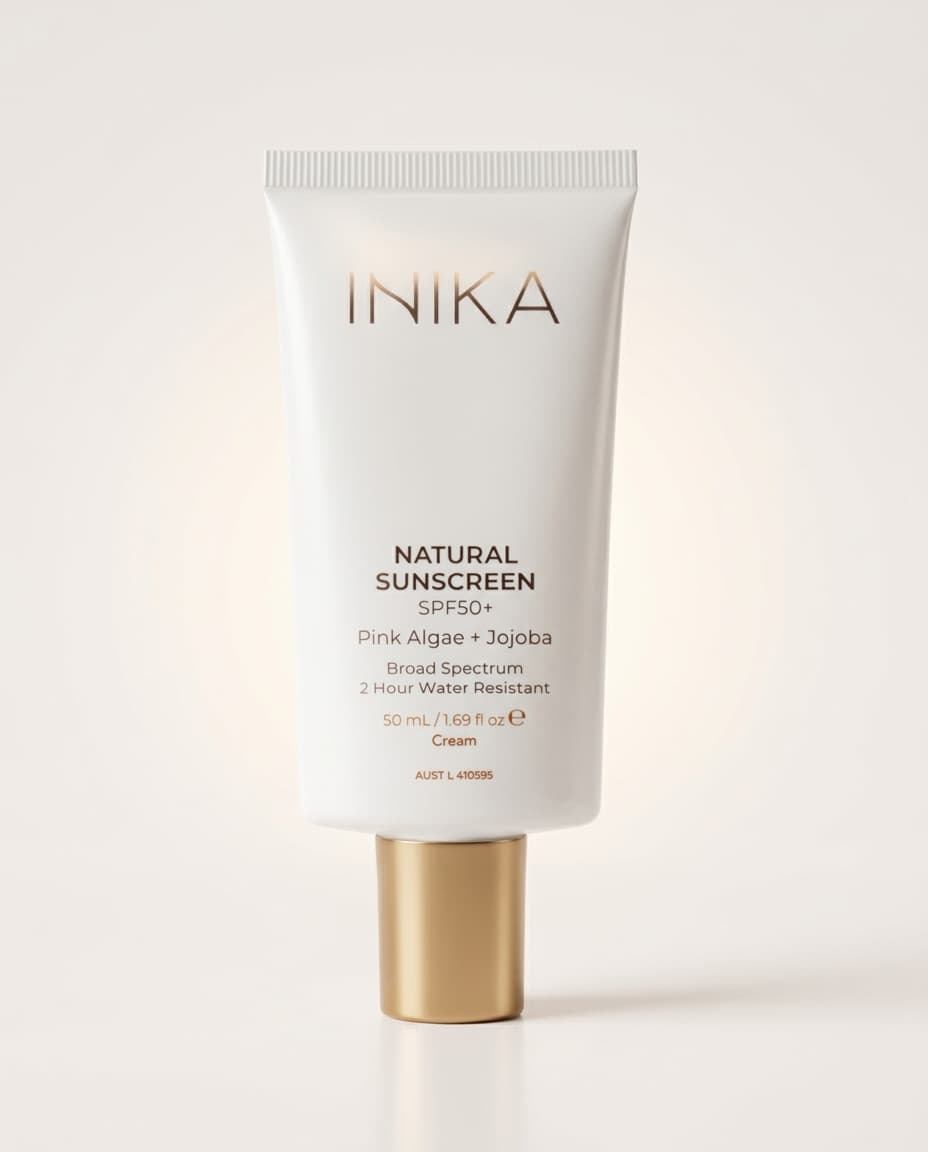
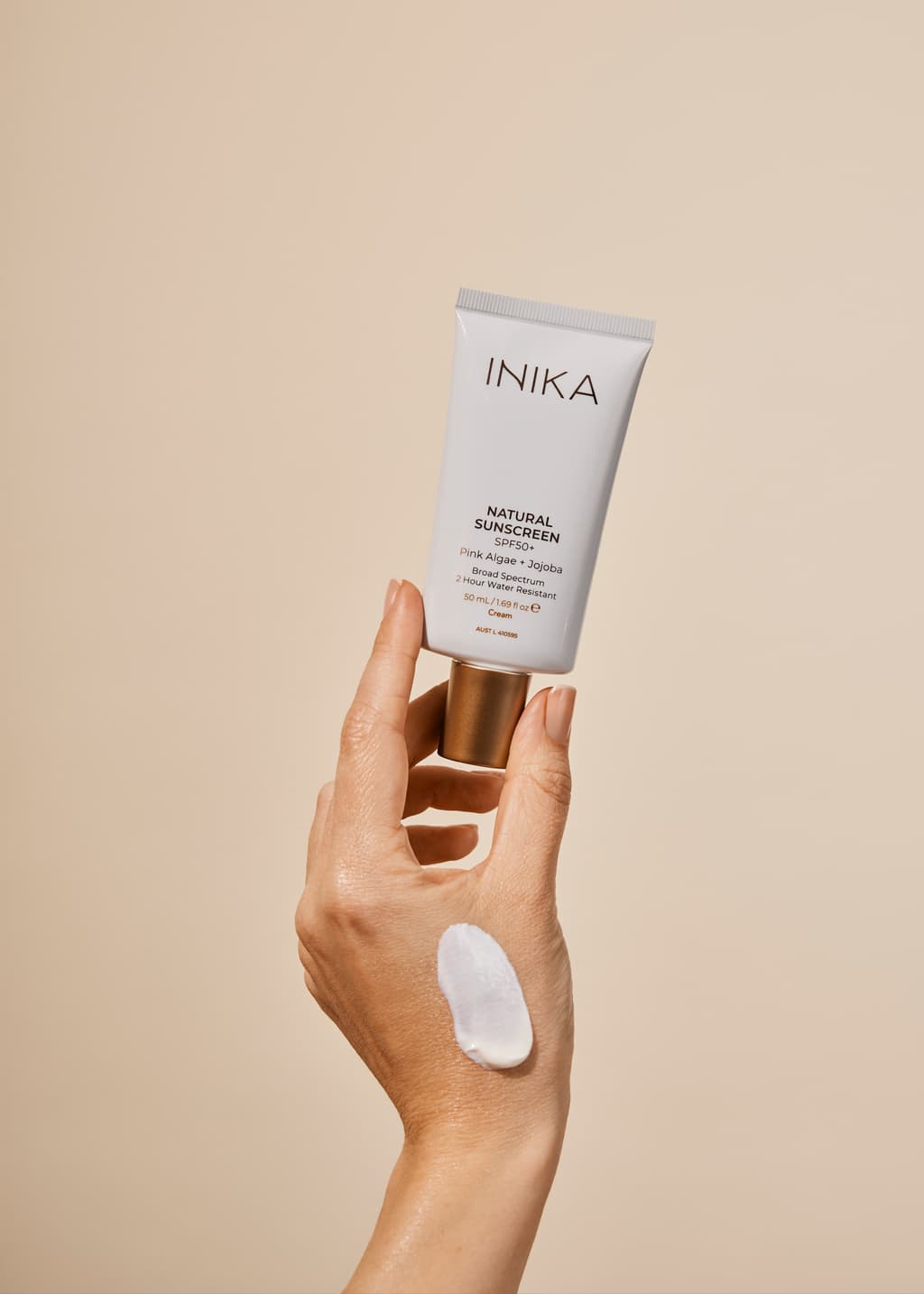
INIKA Natural Sunscreen SPF50+
 INIKA OrganicNatural Sunscreen SPF50+2.545 денView
All of the above applies to INIKA Natural Sunscreen SPF50+. The only active filter is non-nano zinc oxide (22.75%) — broad-spectrum, reef-friendly, water-resistant for up to two hours. The texture is hydrating and works as a primer, so the excuse "it doesn't sit well under my makeup" is eliminated. Vegan, oxybenzone-free.